Farming Land: A Complete Guide to Benefits, Investment & Buying Tips
What is Farming Land?
Farming land is agricultural land used for cultivating crops, growing fruit-bearing trees, vegetables, medicinal plants, or timber. It is one of the oldest and most reliable asset classes, offering both financial growth and environmental benefits.
With increasing urbanization and limited land availability, it has become a preferred investment for individuals looking for long-term wealth creation, passive income opportunities, and a sustainable lifestyle.
Why Invest in Farming Land?
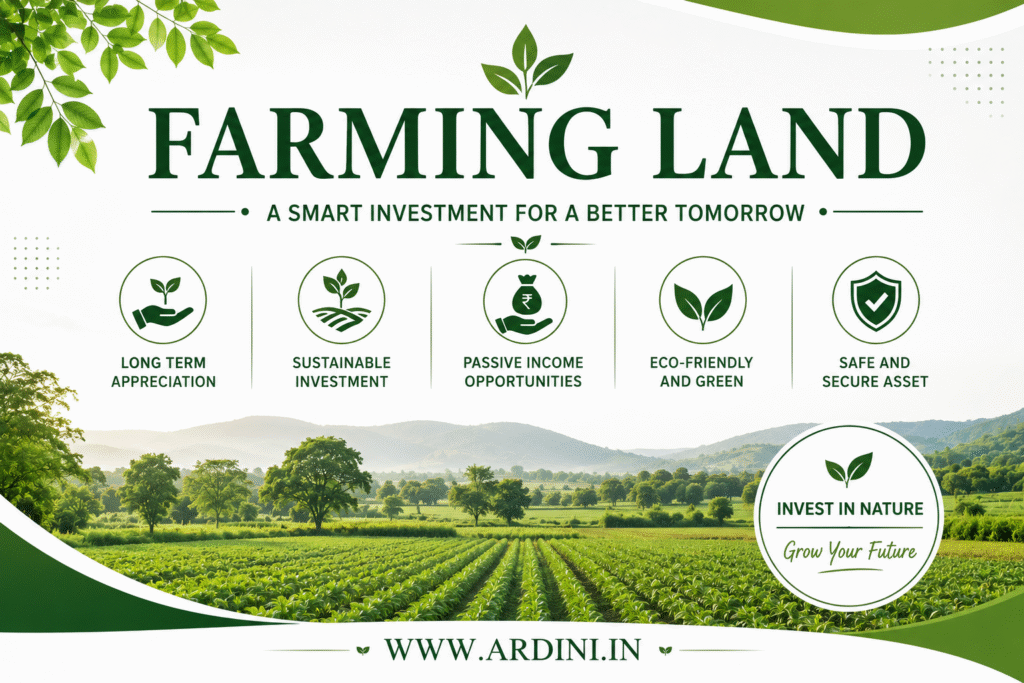
1. Long-Term Land Appreciation
Agricultural land located near developing highways, industrial corridors, and growing cities has the potential to appreciate significantly over time.
2. Sustainable Investment
Unlike many financial assets, land is a tangible investment that contributes to food production, green cover, and environmental sustainability.
3. Passive Income Opportunities
Professionally managed farming land can generate income through:
- Fruit cultivation
- Timber plantations
- Medicinal plants
- Seasonal crops
- Agroforestry
Benefits of Owning Farming Land
Capital Growth
Land generally increases in value over the long term, especially in developing regions.
Portfolio Diversification
Adding agricultural land to your investment portfolio helps reduce dependence on traditional investments such as stocks and mutual funds.
Inflation Protection
Land values and agricultural produce often increase alongside inflation, helping preserve purchasing power.
Eco-Friendly Investment
Owning land supports sustainable farming practices and contributes to environmental conservation.
Legacy Asset
Agricultural land is a valuable asset that can be passed on to future generations.
Things to Check Before Buying Land
Before investing, ensure you verify:
- Land ownership documents
- Title deed
- Adangal/Pahani records
- Encumbrance Certificate (EC)
- Access roads
- Water availability
- Soil quality
- Electricity availability
Proper legal verification helps avoid future disputes.
Best Locations for Land Investment
When selecting it, consider locations that offer:
- Good road connectivity
- Nearby highways
- Reliable water sources
- Fertile soil
- Industrial development
- Growing residential projects
- Future infrastructure projects
These factors significantly influence long-term appreciation.
Managed Farm Land vs Traditional Farm Land
Traditional Farm Land
- Requires regular maintenance
- Owner manages farming activities
- Higher operational involvement
- Requires agricultural knowledge
Managed Farm Land
- Professionally maintained
- Plantation managed by experts
- Irrigation and maintenance included
- Suitable for investors with limited farming experience
- Hassle-free ownership
Managed farmland allows investors to enjoy land ownership without handling day-to-day agricultural operations.
Why is it becoming popular in India
Several factors are driving interest in farming land:
- Increasing land scarcity
- Rising demand for organic food
- Better road infrastructure
- Growth of agroforestry
- Sustainable investment awareness
- Higher demand for green assets
- Urban investors seeking nature-based investments
These trends are making it an attractive long-term investment.
Common Mistakes to Avoid
Avoid these mistakes before purchasing:
- Buying land without legal verification
- Ignoring water availability
- Choosing inaccessible locations
- Not checking soil fertility
- Investing without understanding future development plans
- Purchasing solely based on low prices
Conduct proper due diligence before making any investment.
Why Choose Ardini Managed Farmland?
Ardini offers professionally managed farmland designed for investors seeking long-term value and hassle-free ownership.
Key highlights include:
- Professionally managed plantations
- Sustainable farming practices
- Strategic location near Bangalore
- Long-term asset appreciation potential
- Transparent documentation
- Expert maintenance and irrigation support
- Green investment opportunity
Location Benefits:
- 110 km from Bangalore International Airport
- 5 km from KIA Manufacturing
- 200 meters from Gollapalli Reservoir
- 4.5 km from NH44
Whether you’re a first-time investor or looking to diversify your portfolio, managed farmland can be a practical and sustainable choice
Conclusion
Farming land is more than just an agricultural asset—it is a long-term investment that combines financial growth, environmental responsibility, and wealth preservation. By selecting the right location, verifying legal documents, and considering professionally managed farmland, investors can benefit from both appreciation potential and sustainable ownership.
If you are planning to invest in farming land, take time to evaluate the location, legal status, water resources, and future growth prospects to make an informed decision
Frequently Asked Questions (FAQs)
1. What is farming land?
It is agricultural land used for cultivating crops, fruits, vegetables, timber, or other agricultural produce.
2. Is farming land a good investment?
Yes. it can offer long-term appreciation, portfolio diversification, and sustainable value, especially when located in growth corridors.
3. What documents should I verify before buying farming land?
Check the title deed, Adangal/Pahani, Encumbrance Certificate, ownership records, and ensure there are no legal disputes.
4. What is managed farming land?
Managed farming land is agricultural land where plantation, irrigation, maintenance, and harvesting are professionally handled by a management company.
5. Can farming land generate income?
Yes. Income may be generated through crops, fruit plantations, timber, medicinal plants, or agroforestry, depending on the farming model.
6. How do I choose the best farming land?
Look for fertile soil, water availability, legal clarity, road connectivity, and future infrastructure development before investing.