
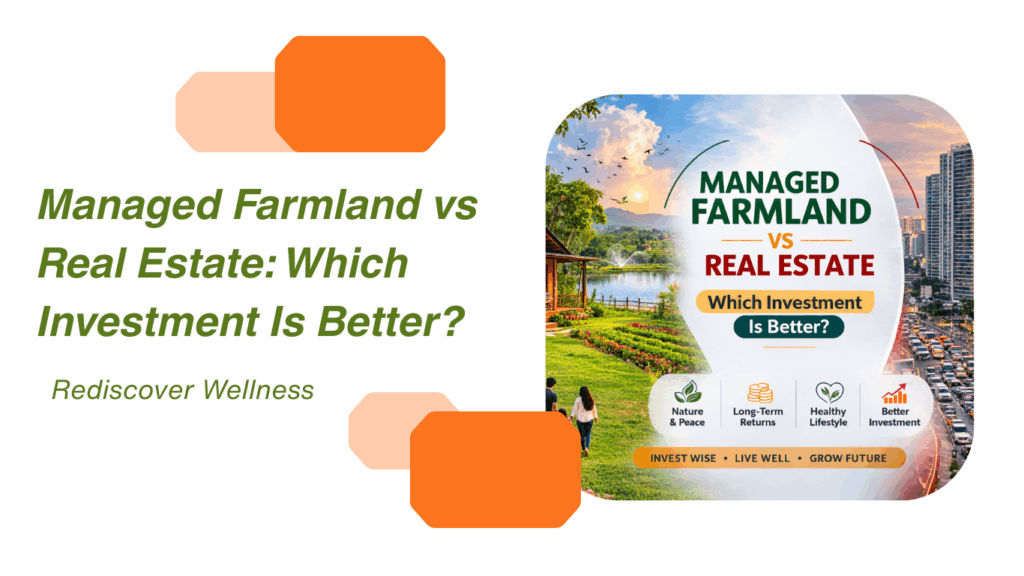
Managed Farmland vs Real Estate: Which Investment Is Better?
Investing in land or property remains a reliable strategy for building wealth. Many investors now compare managed farmland with traditional real estate to determine which offers superior returns, lifestyle benefits, and long-term value. The following comparison outlines key differences to help you make an informed decision.
Managed Farmland vs Real Estate
1. Investment Cost
- Managed farmland is typically more affordable than urban real estate, including apartments and commercial properties.
- Investors can buy farmland for Sale Near Bangalore at a lower entry cost than city real estate.
- Real estate in cities requires a higher initial investment due to land prices, construction costs, and taxes.
2. Appreciation Potential
- Land is a limited resource, and farmland near developing regions often appreciates significantly.
- Managed Farmland Near Bangalore is gaining popularity due to infrastructure growth and an increasing demand for nature-based investments.
- While real estate properties may appreciate, buildings can depreciate over time due to aging and maintenance costs.
- Farmland, on the other hand, is a physical asset that generally increases in value as demand rises.
3. Maintenance and Management
- Traditional real estate requires regular maintenance such as repairs, tenant management, and property upkeep.
- In contrast, Managed Farmland projects are professionally maintained by farm management teams.
- Investors in Farmland Investment Near Bangalore do not need to worry about farming operations, irrigation, or crop management because experts handle everything.
4. Lifestyle and Nature Benefits
- Real estate investments typically focus on financial returns, but farmland offers both financial and lifestyle benefits.
- Owning Weekend Farmland Near Bangalore allows investors to escape city stress and enjoy nature, greenery, and fresh air.
- Many managed farmland projects include cottages, walking trails, and recreational amenities, making them perfect for family visits and relaxation.
5. Passive Income Opportunities
- Real estate can generate income through rent, but rental income may fluctuate depending on market demand and vacancy rates.
- Managed Farmland can generate agricultural income through crops, fruit plantations, or timber plantations.
- Investors can benefit from long-term crop yields while also enjoying land appreciation.
6. Environmental Value
- Managed farmland promotes sustainable and eco-friendly investments.
- Projects often focus on organic farming, water conservation, and tree plantations.
- By investing in it, investors contribute to environmental preservation while owning a productive asset.
- Traditional real estate development may not always offer these environmental benefits.
7. Risk Factors
- Real estate markets can fluctuate due to oversupply, economic changes, or rental demand variations.
- Farmland investments are generally considered stable because land value tends to grow steadily over time.
- When investing in farmland for Sale Near Bangalore, choosing a trusted managed farmland project is important to ensure proper land titles and management.
8. Weekend and Leisure Value
- Weekend Farmland Near Bangalore offers a peaceful escape from busy city life, allowing professionals to relax in nature.
- Unlike apartments or office spaces, farmland provides a natural retreat where families can spend quality time together. 🌿
9. Long-Term Wealth Creation
- Both investments can build wealth, but farmland has a unique advantage because it combines land appreciation with agricultural productivity.
- Investors looking for a long-term asset often prefer Managed Farmland due to its lower maintenance and growing demand for nature-based investments.
Conclusion
In conclusion, both real estate and managed farmland offer investment opportunities, but managed farmland stands out as a more holistic and future-ready option. While traditional real estate focuses mainly on rental income and appreciation, managed farmland combines land value growth with additional income streams from agriculture and plantations. It also provides a unique advantage of sustainability, promoting eco-friendly practices and contributing to long-term environmental balance.
Moreover, managed farmland reduces the burden of ownership through professional management, making it ideal for modern investors who seek hassle-free returns and a peaceful lifestyle. With increasing demand for green spaces and sustainable assets, farmland is emerging as a strong alternative investment class.