Agriculture Farmland: A Smart Investment for Sustainable Growth
Agriculture farmland is gaining popularity as a reliable and profitable investment option. With increasing demand for food, organic produce, and sustainable living, owning agriculture farmland offers both financial and environmental benefits. Below is a detailed, SEO-focused guide to help you understand its importance and advantages.
1. What is Agriculture Farmland?
Agriculture farmland refers to land used for farming activities such as crop cultivation, horticulture, and livestock management. It is a valuable asset that supports food production and contributes to economic growth.
2. Growing Demand for Agriculture Farmland
- Rising population increases food demand
- Shift towards organic and chemical-free farming
- Urban investors exploring rural assets
- Government support for agriculture development
This rising demand makes a high-potential investment opportunity.
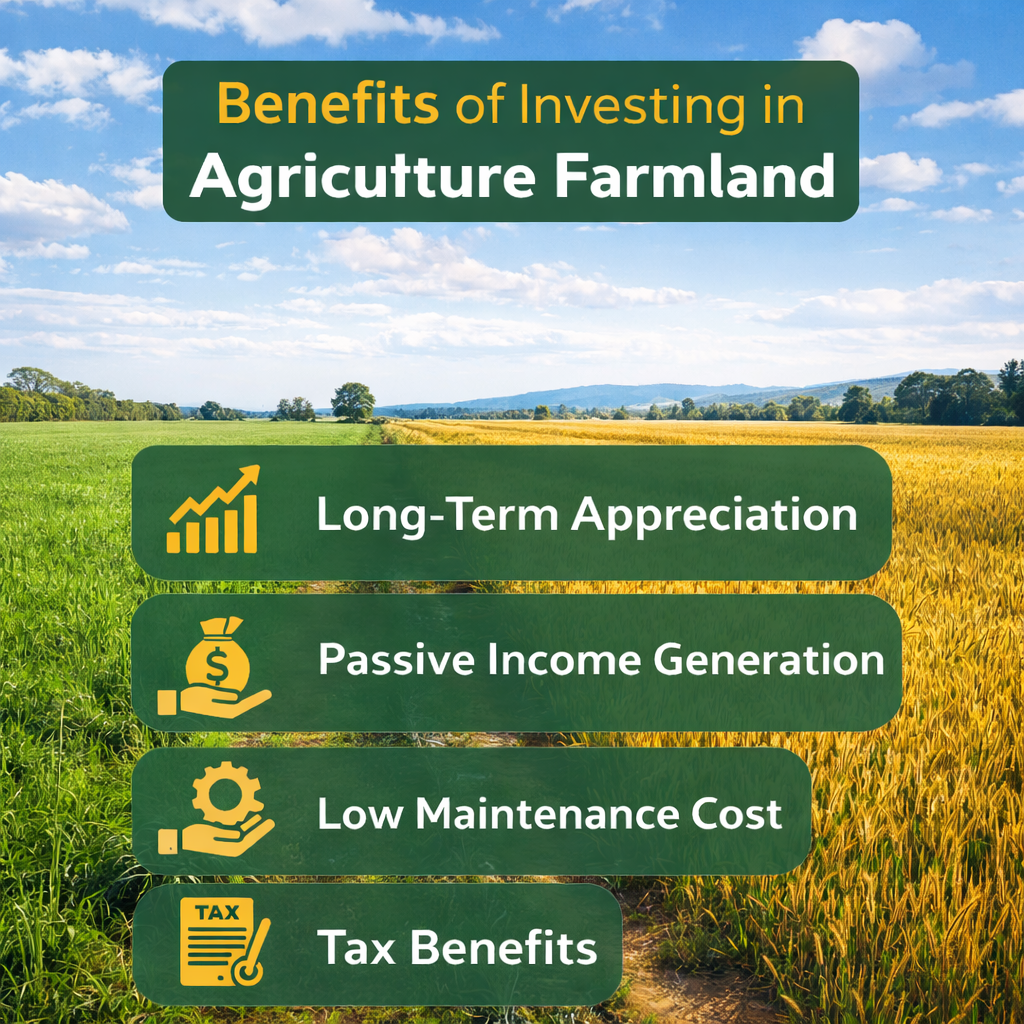
3. Benefits of Investing in Agriculture Farmland
a) Long-Term Appreciation
It value tends to increase over time, especially near developing regions and cities.
b) Passive Income Generation
- Lease farming
- Crop sharing
- Plantation income (fruits, timber, etc.)
c) Low Maintenance Cost
Compared to real estate, farmland requires less maintenance when professionally managed
d) Tax Benefits
In many cases, agricultural income is tax-free, making it financially attractive.
4. Role of Managed Agriculture Farmland
It is a modern approach where professionals handle farming operations.
Key Features:
- End-to-end farm management
- Expert crop planning
- Water and soil management
- Security and maintenance
This model is ideal for investors who want returns without daily involvement.
5. Types of Agriculture Farmland
- Crop Farmland – Rice, wheat, vegetables
- Plantation Farmland – Mango, coconut, sandalwood
- Organic Farmland – Chemical-free farming
- Agroforestry Land – Trees combined with crops
Diversifying farmland types can improve income potential.
6. Key Factors to Consider Before Buying
- Legal verification of land documents
- Soil quality and water resources
- Accessibility and infrastructure
- Developer credibility for managed farmland
- Future development potential
Doing proper research helps avoid risks.
7. Environmental and Lifestyle Benefits
- Promotes sustainable living
- Reduces carbon footprint
- Supports biodiversity
- Provides peaceful weekend getaway
It is not just an investment—it’s a lifestyle upgrade.
8. Future of Agriculture Farmland
The future of farmland is evolving rapidly, driven by technology, sustainability, and increasing investment demand. Below are key points that highlight its growth potential:
1. Rising Demand for Food Production
- With the global population increasing, the demand for food is growing steadily.
- It will play a crucial role in ensuring food security.
- This demand directly increases the value of farmland over time.
2. Growth of Organic Farming
- Consumers are shifting towards organic and chemical-free food.
- It is being widely used for organic cultivation.
- This trend creates higher income opportunities for farmland owners.
3. Technology in Agriculture
- Use of modern tools like drip irrigation, automation, and smart farming.
- AI and data-driven farming improve productivity and efficiency.
- Technology makes farmland more profitable and less labor-intensive.
4. Increasing Investor Interest
- Urban investors are now exploring agriculture farmland as an asset.
- Managed farmland projects are making investment easier.
- It is becoming a preferred option for long-term wealth creation.
5. Sustainable and Eco-Friendly Investment
- It supports green and sustainable living.
- Helps in reducing carbon footprint and preserving nature.
- Investors are now focusing on eco-conscious assets.
6. Government Support and Policies
- Governments are promoting agriculture through subsidies and schemes.
- Improved infrastructure and irrigation facilities boost farmland value.
- Policies are encouraging private investment in farmland.
7. High Appreciation Potential
- Land is a limited resource, making it more valuable over time.
- Farmland near developing cities shows faster price growth.
- It offers both capital appreciation and regular income.
Conclusion
Agriculture farmland is a powerful combination of financial growth, passive income, and environmental sustainability. Whether you are an investor or someone looking for a peaceful retreat, investing in agriculture farmland offers long-term benefits with minimal risk. With proper planning and the right location, it can become one of the most rewarding investments.